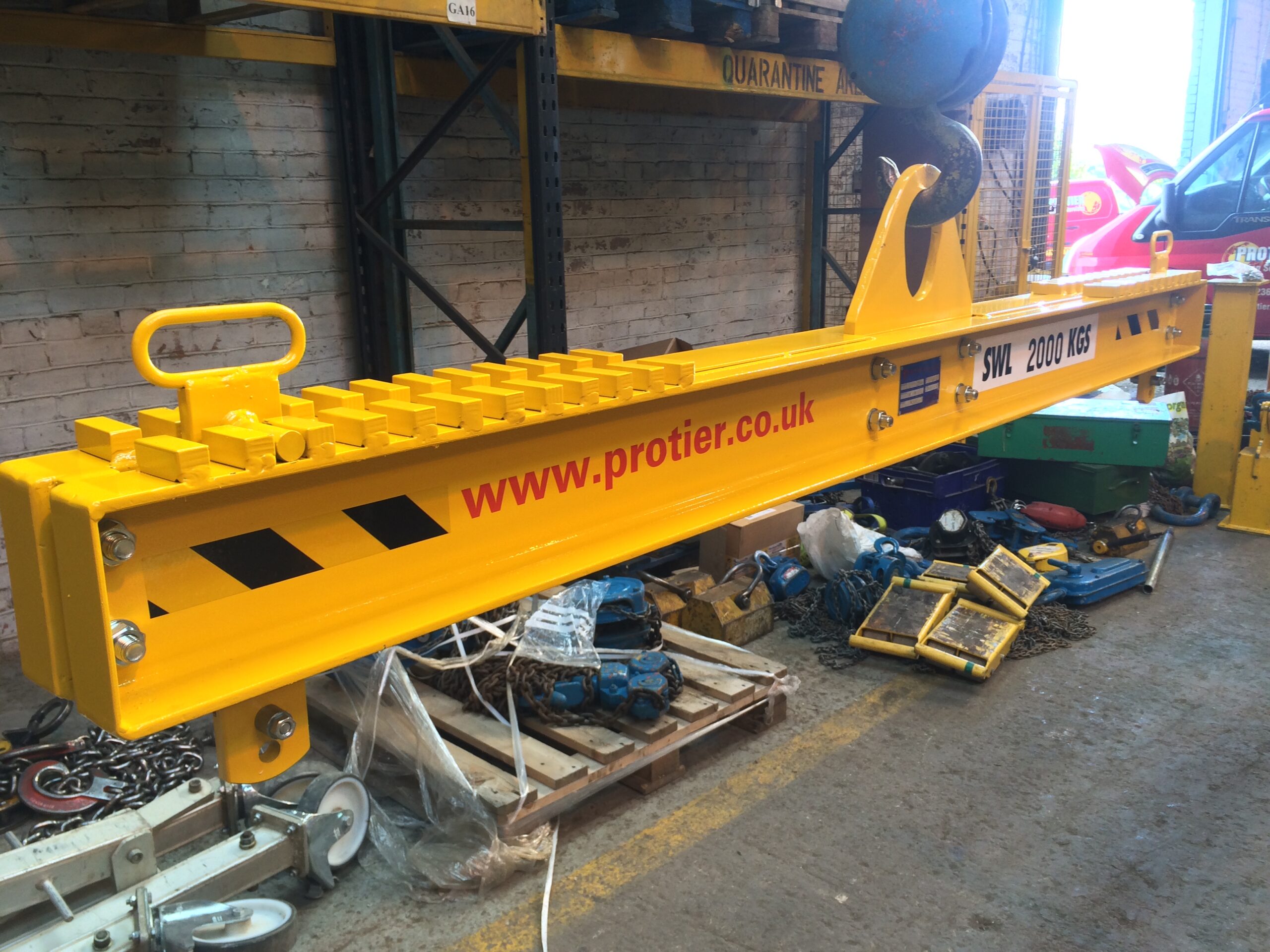
Choosing the right lifting hook starts with understanding how it connects and what it is designed to do. From adjusting a chain sling to connecting with a lifting point, each design has a different role.
In this guide, Protier Lifting Services explains the main hook types, using examples from the William Hackett HACK8 range.
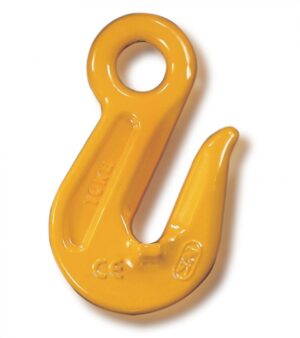
Grab Hook
A grab hook has a narrow throat shaped to engage a chain link. It is commonly used as a shortening device, allowing the effective length of a chain sling leg to be adjusted to suit the lifting arrangement.
The hook must match the chain size, grade and approved assembly. Always follow the manufacturer’s instructions for seating the link and any capacity reduction that applies. Make adjustments with the load safely supported and the chain slack.
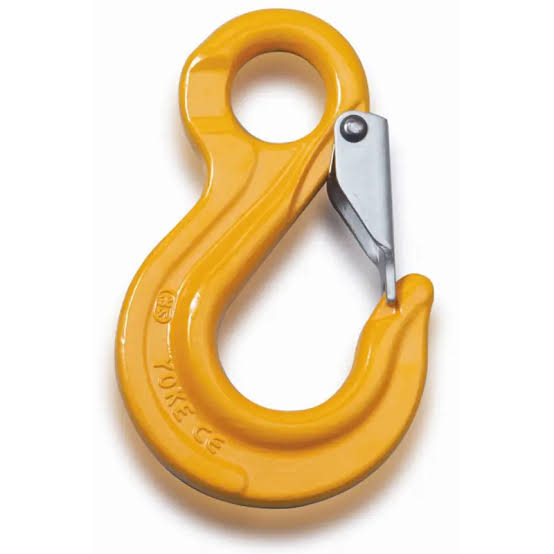
Eye Hook
An eye hook has a closed loop at the top for attachment to a suitable sling assembly. In a chain sling, an approved mechanical coupling link can join the chain to the hook eye. Eye hooks can also form part of correctly designed wire rope sling assemblies.
The word eye describes the attachment, so eye hooks are available with different hook mechanisms, including conventional safety latches and self-locking designs. An eye connection does not inherently require welding.
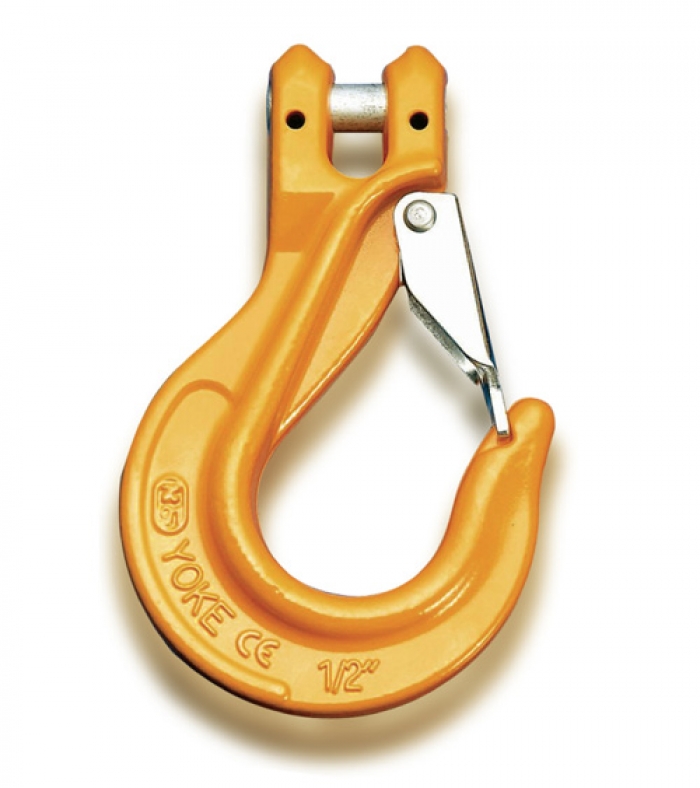
Sling Hook
A sling hook has an open bowl and a wider throat than a grab hook, allowing it to engage a suitable lifting point. The version shown has a spring-loaded safety latch that helps retain the connection when the sling becomes slack.
The lifting point should sit properly in the bowl, with the latch able to close freely. The latch is a retaining device and must not carry the load. Sling hooks are available with eye, clevis and swivel attachments.
Swivel Hook
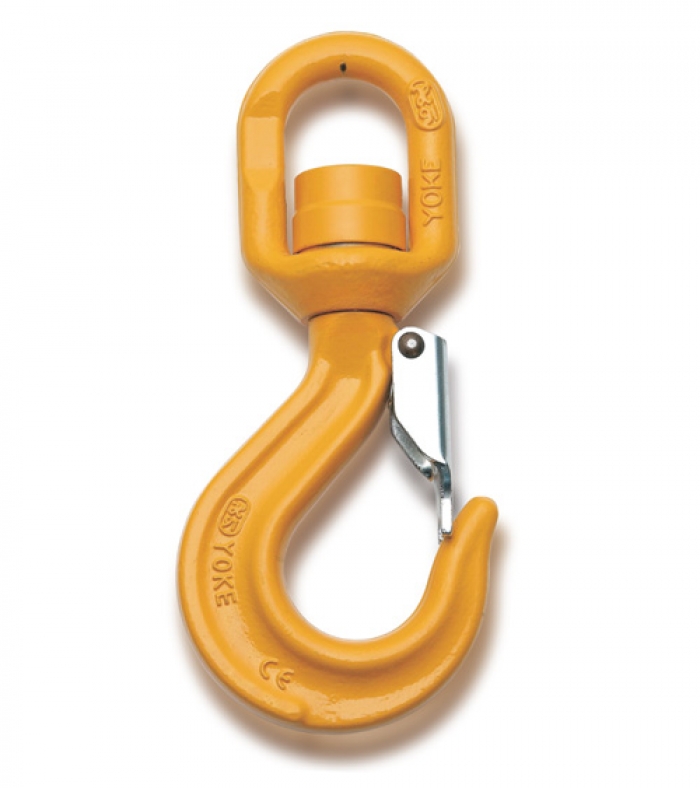
A swivel hook allows the hook body to turn relative to its upper connection, helping it align with the lifting point. This can make positioning easier where the hook needs to face a particular direction.
Check whether the specific model is approved to rotate under load. The William Hackett HACK8 swivel sling hook shown uses a ball bearing swivel designed for this purpose. Other swivel designs may only be intended for positioning before loading.
Self-Locking Hook
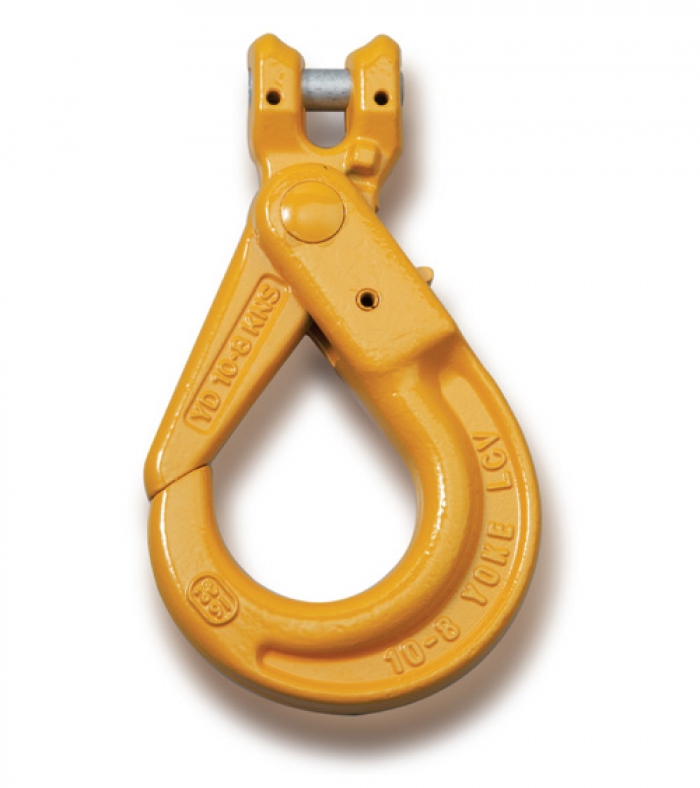
A self-locking hook uses a positive locking mechanism to secure its closure. The William Hackett HACK8 design locks automatically as the load is applied and requires manual operation of the release trigger once the load has been relieved.
This provides a different retention arrangement from a conventional spring-loaded latch. Before lifting, check that the hook is correctly engaged and that the closure and locking mechanism operate fully. Self-locking hooks are available with eye, clevis and swivel connections.
What Does Clevis Mean?
A clevis is a fork-shaped connection with a load pin that allows a compatible hook to connect directly to the end link of a chain. The chain link fits between the two sides of the fork and is secured by the manufacturer’s load pin and retaining arrangement.
A separate coupling link is therefore usually unnecessary at this connection. For example, a clevis self-locking hook combines a direct chain connection with a self-locking hook mechanism. Always match the clevis fitting to the specified chain size and grade, using the correct pins and retainers.
Choosing the Right Hook
Consider the working load limit of the complete sling, chain size and grade, lifting-point dimensions, sling angles and operating conditions. A hook should seat correctly and align with the load without being forced into place or loaded on its tip.
At Protier Lifting Services, we supply chain slings and lifting accessories and can help you select a suitable hook arrangement for your application.
Need help choosing your hook? Contact Protier on 0113 236 1811 or email sales@protier.co.uk.