Spreader Beam or Lifting Beam – Selecting the correct tool for the lift
When planning a lift, choosing the correct below-the-hook lifting attachment is just as important as selecting the right crane, hoist, sling or shackle. Two of the most common options are spreader beams and lifting beams. They may look similar, but they work in very different ways.
At Protier Lifting Services, we understand that the right lifting solution depends on the load, the lifting points, the headroom available and the working environment.
What is a Spreader Beam?
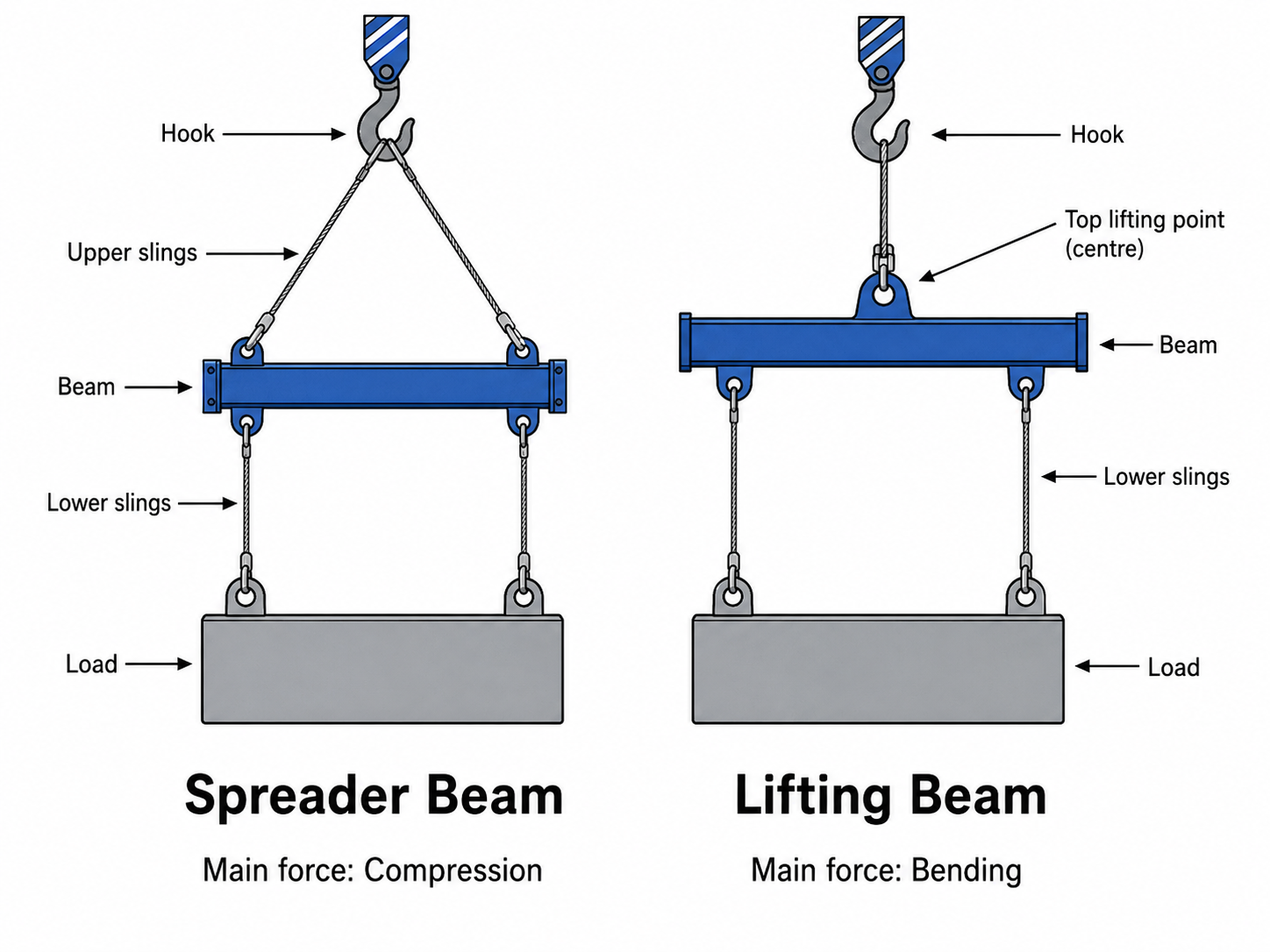
A spreader beam is used to keep sling legs apart and reduce the angle of the slings going down to the load. The beam is normally suspended from the crane hook using two upper slings, with lower slings connected from each end of the beam to the load.
The main force in a spreader beam is compression, which means the beam is being pushed together along its length. This makes spreader beams very efficient for lifting long, wide or delicate loads where the lifting points need to remain apart.
Spreader beams are often used for:
- Long steel sections
- Fabricated frames
- Pipework
- Boats and containers
- Loads that may be damaged by inward sling pressure
What is a Lifting Beam?
A lifting beam is usually connected to the crane hook from a central lifting point, with one or more lifting points underneath the beam. Unlike a spreader beam, it does not normally require upper angled slings.
A lifting beam works mainly in bending, as the load is suspended from points along the underside of the beam. This can make lifting beams useful where there is limited headroom or where the crane hook needs to be directly above the centre of the load.
Lifting beams are commonly used for:
- Loads with fixed lifting points
- Machinery handling
- Low headroom lifting
- Balanced centre lifts
- Repetitive workshop lifting operations
Which One Should You Choose?
As a simple guide, a spreader beam is often the better choice when the load is long, wide or needs to be supported from multiple points with reduced sling angles.
A lifting beam may be more suitable when headroom is limited, the load has specific lifting points, or a central hook connection is required.
However, the correct choice should always consider:
- Weight of the load
- Centre of gravity
- Number and position of lifting points
- Sling angles
- Headroom available
- Crane or hoist capacity
- Site conditions
- Required Safe Working Load
UK Lifting Requirements
In the UK, lifting beams, spreader beams and associated lifting accessories should be correctly rated, marked with their Safe Working Load, inspected and thoroughly examined in accordance with LOLER requirements.
Where lifting attachments are designed or supplied for a specific application, suitable design verification, documentation and user instructions should also be considered.
Hire or Purchase call Protier Lifting Services – 0113 2361811
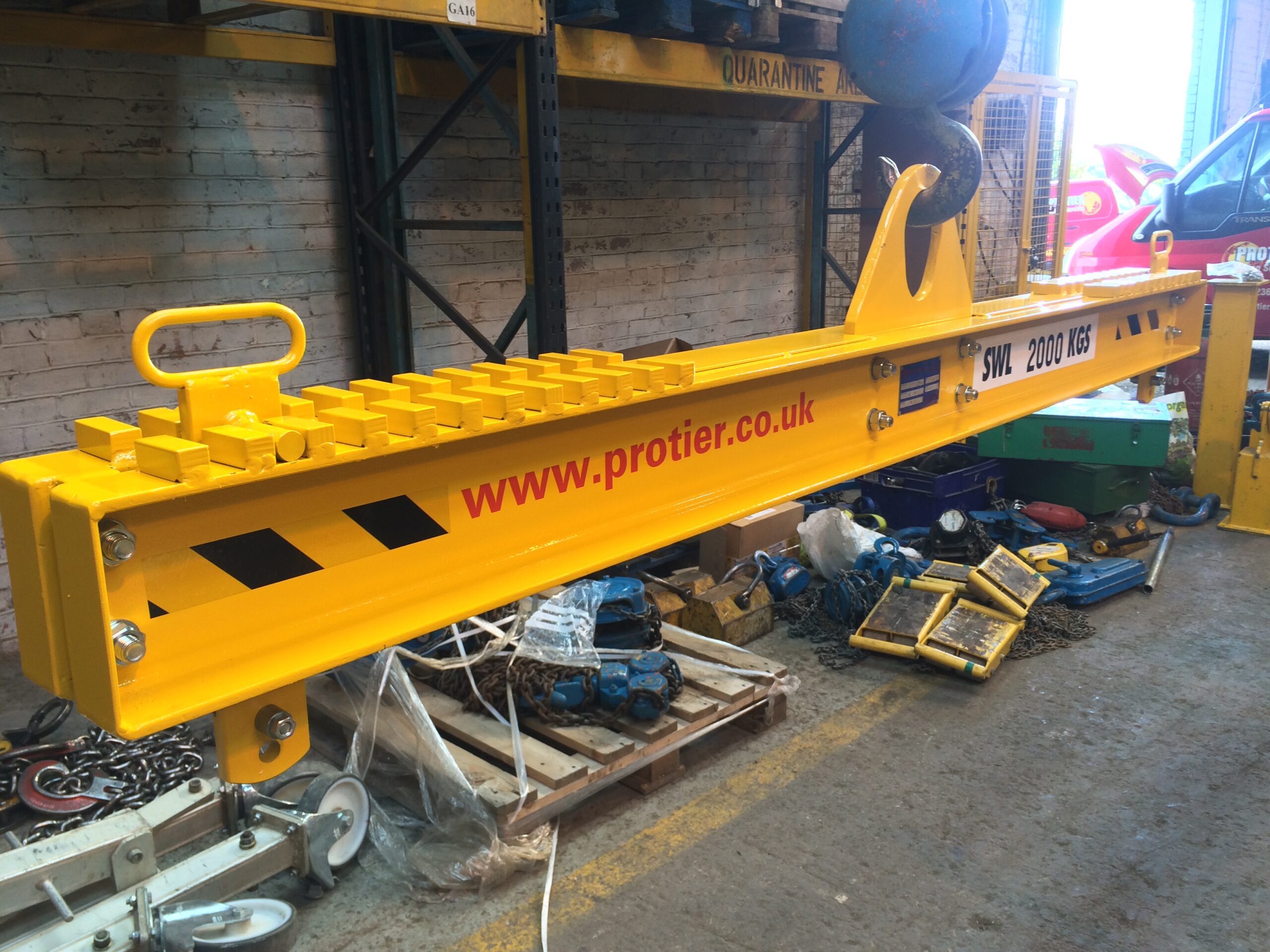
If you are unsure whether a spreader beam or lifting beam is the right option for your application, Protier Lifting Services can help advise on suitable lifting equipment, lifting accessories and inspection requirements. We offer a full range of both spreader beams, lifting beam and semi-spreader lifting beams for hire, sale and bespoke fabrications.
Choosing the correct lifting attachment helps improve safety, protect the load and make the lifting operation more controlled and efficient.